Kano Market Fire Raises Fresh Questions Over Safety Standards
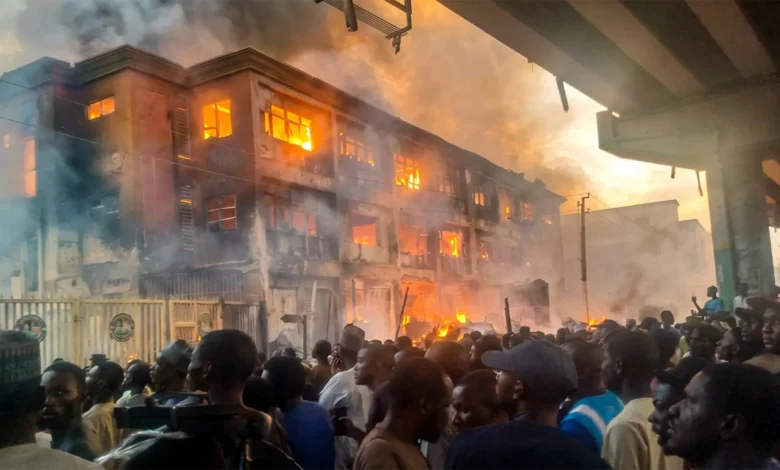
Another major fire tore through a section of Singer Market in Kano, destroying shops in the Gidan Glass area and leaving traders scrambling to save what they could. Eyewitnesses said the blaze started in a provision shop in the afternoon before spreading rapidly across adjoining stalls. Thick smoke filled the sky as traders and residents struggled to salvage goods. Fire service officials arrived with response trucks, but reports indicated that initial water supply was quickly exhausted before reinforcement arrived.
This was the second fire incident at the same market within weeks. For a commercial hub that supplies foodstuffs and household goods across northern Nigeria and even into neighboring countries, the recurrence raises serious safety concerns.
While investigations are ongoing, the pattern of market fires in Kano suggests that such incidents are rarely isolated accidents. They often point to structural safety weaknesses, overcrowded trading environments, and gaps in preventive risk management.

Possible Causes
Although the exact trigger is yet to be confirmed, market fires of this nature commonly result from electrical faults. Overloaded sockets, ageing wiring, and informal electrical connections may increase the likelihood of short circuits.
Cooking activities within stalls could also pose risks, especially where gas cylinders or open flames are used near combustible goods. In provision markets, packaging materials, plastics, cartons, and food items can ignite easily once exposed to sparks or heat.
Human factors such as unattended appliances, improper storage of flammable materials, or accidental ignition cannot be ruled out. These possibilities remain suggestive rather than definitive until official findings are released.
Why It Spread So Quickly
Singer Market, like many traditional markets, is densely packed. Narrow walkways and closely built stalls may have allowed the fire to jump quickly from one shop to another.
Limited on-site firefighting infrastructure could also have contributed. Where hydrants, extinguishers, or steady water supply are insufficient, early containment becomes difficult. In such environments, even a small flame can escalate into a large-scale inferno within minutes.
Wind patterns and building design may further intensify the spread, particularly in two-storey structures where heat rises and traps smoke.
Preventive Measures
While no safety system eliminates risk entirely, several measures could reduce the likelihood and impact of similar incidents.
Regular electrical audits and certified wiring installations may help minimize short circuit risks.
Routine fire safety training for traders could improve early response capacity.
Clear emergency exits, wider access routes, and strict enforcement against illegal stall modifications may slow fire spread.
Functional hydrants and water reservoirs within markets could strengthen firefighting efforts.
Periodic joint inspections by market authorities and fire services may identify hazards before they escalate.
The Kano market fire is a reminder that commercial hubs require structured safety planning. Fires may not always be predictable, but their impact can be significantly reduced through proactive risk management and a stronger culture of safety compliance.
ALSO READ: Ebonyi Mining Collapse Exposes Deep Safety Failures in Nigeria’s Extractive Sector