Ebonyi Mining Collapse Exposes Deep Safety Failures in Nigeria’s Extractive Sector
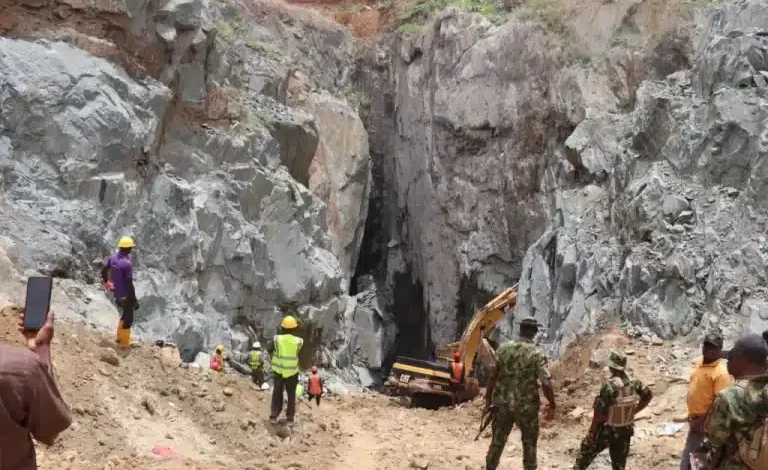
The recent mining pit collapse in Enyim Agalegu community, Ikwo Local Government Area of Ebonyi State, which claimed three lives and left four others injured, is another painful reminder of the deep safety gaps in Nigeria’s extractive sector. According to community leaders, the victims were engaged at a mining site reportedly linked to First Patriots when the pit caved in.
Beyond the immediate grief, the incident raises critical Health, Safety and Environment concerns that demand urgent attention.
Understanding the Risk in Mining Operations
Mining is inherently hazardous. Open pits, unstable overburden, poor slope design, lack of proper reinforcement, and uncontrolled excavation significantly increase the risk of collapse. In many small scale or loosely regulated operations, basic geotechnical assessments are either poorly conducted or completely ignored.


Pit wall instability is one of the most common causes of fatal mining accidents globally. Without proper benching, slope angle control, drainage management, and continuous monitoring, soil and rock structures can weaken rapidly, especially during heavy rainfall or after prolonged excavation.
Where illegal or informal mining activities occur, the risk multiplies. Workers often operate without proper Personal Protective Equipment, site supervision, emergency response planning, or hazard communication systems. Young and unemployed miners, driven by economic pressure, may take on high risk tasks without understanding the structural dangers of unstable pits.
Key Safety Failures That Often Lead to Collapses
Several recurring safety gaps are common in incidents like the Ebonyi collapse:
First, absence of geotechnical risk assessment before and during excavation.
Second, poor site control allowing unauthorised access into high risk zones.
Third, lack of continuous inspection by competent mining engineers.
Fourth, weak enforcement of regulatory standards.
Fifth, absence of structured emergency preparedness and rescue systems.
When communities allege abandoned or partially controlled sites, the risk of informal access increases. An unmonitored site quickly becomes a hazard zone.
How Such Accidents Can Be Prevented
Mining collapses are rarely sudden events without warning. They are often the final outcome of ignored warning signs.
To prevent future tragedies:
Comprehensive site risk assessments must be mandatory and periodically updated.
Slope stability monitoring systems should be installed, particularly in active and recently excavated pits.
Access control must be strengthened to prevent unauthorised entry.
Community engagement is critical. Local leaders should be integrated into safety communication frameworks so that economic desperation does not override hazard awareness.
Government regulators must intensify inspections and impose strict penalties for non compliance with mining safety standards.
Most importantly, safety must not be treated as a cost but as a core operational obligation.
The HSE Imperative
The Ebonyi incident is not just a local tragedy. It reflects a systemic issue within segments of Nigeria’s mining landscape where economic survival, weak enforcement, and inadequate safety culture intersect.
Every mining project must operate under a clearly defined HSE management system that includes hazard identification, risk assessment, control measures, monitoring, incident reporting, and continuous improvement.
Lives should never be collateral damage in the pursuit of mineral wealth.
If lessons are not drawn from the Ebonyi collapse, similar incidents will continue to occur. But with structured safety governance, professional oversight, and community awareness, these deaths are preventable.
The question is not whether mining is dangerous. It is whether we are willing to manage that danger responsibly.
ALSO READ: Why Infrastructure Gaps Are Holding Africa Back from Its Full Potential