Why Human Error Still Causes 80% of Aviation Accidents — And What the Industry Is Doing Wrong
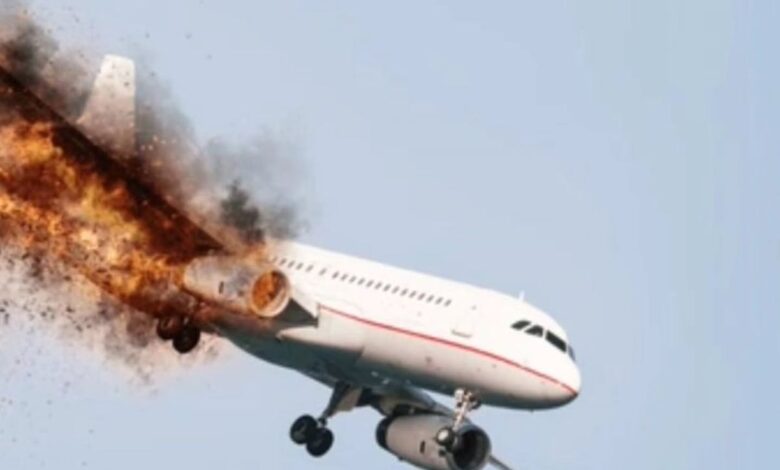
Aviation is often held up as one of the safest and most advanced industries in the world, and for good reason. Modern aircraft are packed with smart systems. Airlines track more data than ever. Training is stricter. Rules are tighter. Investigations are deeper. Cockpits are more automated. Maintenance processes are more detailed. On the surface, it looks like the industry should have pushed human error far into the background by now.
But that has not happened.
For years, one uncomfortable truth has stayed in the conversation: human error is still linked to most aviation accidents. The exact number can vary depending on the study, the type of operation, and how the accident is classified, but the larger point remains the same. People are still at the center of most failures.

That fact is easy to misunderstand.
When people hear “human error,” they often picture one careless pilot, one distracted engineer, or one controller who made a bad call. That is the simple version. It is also the weak version. In real aviation, serious accidents rarely come from one random mistake made in isolation. They come from a chain. A wrong assumption. A rushed handoff. A missed cue. A tired crew. A poor design choice. Weak training. Bad timing. Poor communication. Pressure to keep things moving. By the time the final human mistake shows up, the system has often already failed in several quieter ways.
That is why this issue matters so much. The real problem is not just that humans make mistakes. The real problem is that aviation still builds too many systems that leave humans exposed to predictable mistakes, then acts surprised when those mistakes happen.
The industry talks a lot about safety, but it still gets one big thing wrong: it often treats human error as the end of the story instead of the symptom of a deeper one.
One reason this keeps happening is that aviation still trusts procedures too much on paper and not enough in real life. Procedures matter. Checklists matter. Standard operating rules matter. They are part of what makes aviation safer than many other industries. But rules written in manuals do not always match the pressure of real operations.
A procedure may look perfect in a calm office. It may not feel so perfect in poor weather, during a rushed descent, after a long duty day, or in a cockpit full of distractions. A maintenance process may seem clear in theory but become harder in a noisy hangar, during shift change, with time pressure hanging over the team. When the system assumes that people will always perform exactly as written, under all conditions, it starts asking for failure.
Another big problem is the way the industry talks about automation. Automation has made flying safer. There is no serious doubt about that. Modern systems reduce workload, catch errors, support navigation, and help crews manage complex aircraft more safely than in the past. But automation has not removed human error. It has changed it.
Years ago, pilots made more hands-on flying mistakes. Today, many of the risks come from monitoring, confusion, mode awareness, and delayed reaction when automation does something unexpected. When a crew relies heavily on automated systems, it can become easier to lose touch with what the aircraft is actually doing in that moment. A pilot may know the system, trust the system, and still misunderstand the system under pressure.
That is where the industry still falls into a trap. It treats automation like a cure when it is really a trade-off. It lowers some risks and creates new ones. A pilot who spends less time hand-flying may lose sharpness. A crew that manages systems all day may struggle when forced into sudden manual recovery. A cockpit that looks calm can become overloaded in seconds when the system stops behaving as expected.
Fatigue is another issue the industry still does not handle well enough. Aviation likes to present itself as disciplined, and in many ways it is. But fatigue does not disappear because the culture is serious. It does not care about rank, experience, or professionalism. Tired people still make poorer decisions. They notice less. They react slower. They miss signals. They become more rigid in thinking. They communicate less clearly.
The danger is that fatigue often hides well. A pilot may still sound sharp. A controller may still look composed. A mechanic may still finish the task. But human performance has already dropped. In aviation, that drop matters. The industry has rules around duty time and rest, but many operations still run close to the edge. Delays, staff gaps, schedule pressure, and constant disruption all increase the load. When that happens, fatigue stops being a personal issue and becomes a system risk.
Training is another place where aviation looks stronger than it sometimes is. The industry trains a lot, and that is good. But not all training builds the kind of judgment that prevents real accidents. Some training becomes too neat. Too scripted. Too focused on passing checks instead of dealing with uncertainty.
Real life is messy. Crews do not always get a clear warning and a clean decision. They get mixed signals. Incomplete information. Rapid change. Conflicting demands. Stress. Time pressure. That is where human error grows. A pilot may lock into a wrong plan and stay with it too long. A crew may miss a simple threat because they are busy solving another one. A maintenance team may follow routine so closely that they miss what is unusual about the moment in front of them.
This is why training cannot only test whether people remember the right answer. It also has to test how they think when the answer is not obvious.
Then there is safety culture, which may be the hardest issue of all. Aviation talks often about openness, reporting, and learning from mistakes. That is the right language. But in many places, the real culture is still mixed. People do not always report near misses. Junior staff do not always challenge senior ones. Teams sometimes normalize risky shortcuts because “nothing has happened before.” Workers may keep quiet because they do not want to seem difficult, weak, or slow.
That silence is dangerous.
A healthy safety culture is not one where people claim safety comes first. It is one where people can stop work, question a decision, admit confusion, and report a mistake without feeling punished for it. If that culture is missing, then many problems remain hidden until an accident exposes them the hard way.
Communication failures also keep feeding the same problem. Aviation depends on clear communication between pilots, controllers, cabin crew, maintenance teams, dispatchers, and ground staff. When that chain weakens, small errors grow fast. A misunderstood instruction, an incomplete handover, an assumption that was never confirmed, or a warning that was spoken too late can all move an operation closer to danger.
The frustrating part is that none of this is new. The industry already knows these patterns. It knows that fatigue matters. It knows that automation can confuse. It knows that culture shapes behavior. It knows that communication breaks under pressure. It knows that training can become too narrow. Yet many organizations still respond to accidents by focusing on the final human mistake more than the conditions that made that mistake likely.
That is what the industry is still doing wrong.
It is still too reactive.
Instead of asking, “Why did this person fail?” it should ask, “Why was this system so easy to fail in?” That is a harder question, but it leads to better answers. Better schedule design. Better cockpit design. Better reporting protection. Better crew workload management. Better scenario-based training. Better staffing. Better use of data to catch weak patterns early.
The goal should not be to remove humans from aviation. That is not realistic, and it is not even desirable. Human judgment still saves flights, catches problems, and adapts when systems break. The goal is to design aviation around real human limits instead of pretending those limits can be trained away forever.
That is the deeper truth behind the 80 percent claim.
It does not mean people are the weak link. It means the industry still leans too heavily on people to carry risks that should have been reduced earlier, better, and more honestly.
Until that changes, human error will keep showing up in accident reports, not because the industry does not understand the problem, but because it still has not fixed the conditions that keep creating it.