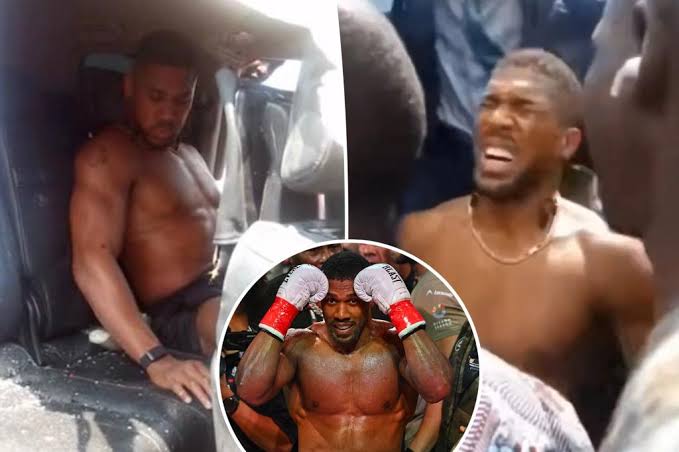
For a brief moment on the Lagos–Ibadan Expressway in Ogun State, fame offered no shield. The crash involving global boxing icon Anthony Joshua was not just another celebrity headline, it was a stark reminder of how vulnerable every road user is on Nigeria’s highways.
Two lives were lost. Several others were injured. And a familiar question resurfaced with urgency: How safe are our roads, really?
On December 29, 2025, on the Lagos-Ibadan Expressway in the Makun area of Ogun State, Nigeria, when the Lexus SUV he was travelling in collided with a stationary truck. Police and road safety officials say two of the five occupants in the vehicle died at the scene, while Joshua sustained minor injuries and was taken to a hospital, and two other passengers escaped unhurt.
The Federal Road Safety Corps indicate the crash was likely caused by excessive speed and a wrongful overtaking maneuver that caused the vehicle to lose control
Beyond the shock and social media reactions, the incident opens up critical safety conversations that affect millions of Nigerians who travel these roads daily, without cameras, escorts, or international attention.

Speed, Overtaking, and the Thin Line Between Arrival and Disaster
Preliminary findings pointed to speed and dangerous overtaking, two of the most common causes of fatal crashes in Nigeria. On major expressways like Lagos–Ibadan, vehicles often travel far above safe limits, encouraged by long stretches of open road and poor enforcement.

Yet speed reduces reaction time. Overtaking on highways with mixed traffic cars, trucks, buses, creates a deadly gamble where one miscalculation can end multiple lives.
The Silent Danger of Parked Heavy Trucks
One critical but often ignored safety issue highlighted by the crash is the presence of stationary or broken-down trucks on highways, sometimes without reflective warnings or hazard signs.
These vehicles effectively become moving death traps, especially at high speed or in poor visibility. Without proper road shoulders, emergency triangles, or enforcement of safety regulations, drivers often meet obstacles too late.
This is not just a driver problem it is a system failure involving infrastructure, regulation, and accountability.
Road Safety is not a Selective Issue
Anthony Joshua survived with non-life-threatening injuries. Most victims on Nigerian roads are not so fortunate and they rarely make headlines. That contrast is important.
If a high-profile figure can be caught in such a situation, it underscores how exposed everyday commuters, students, traders, and families are especially during festive travel periods when roads are crowded and patience is thin.
The tragedy reminds us that road safety is not selective. It does not recognize status, strength, or success.
Where do the Gaps Lie- Engr. Fowode
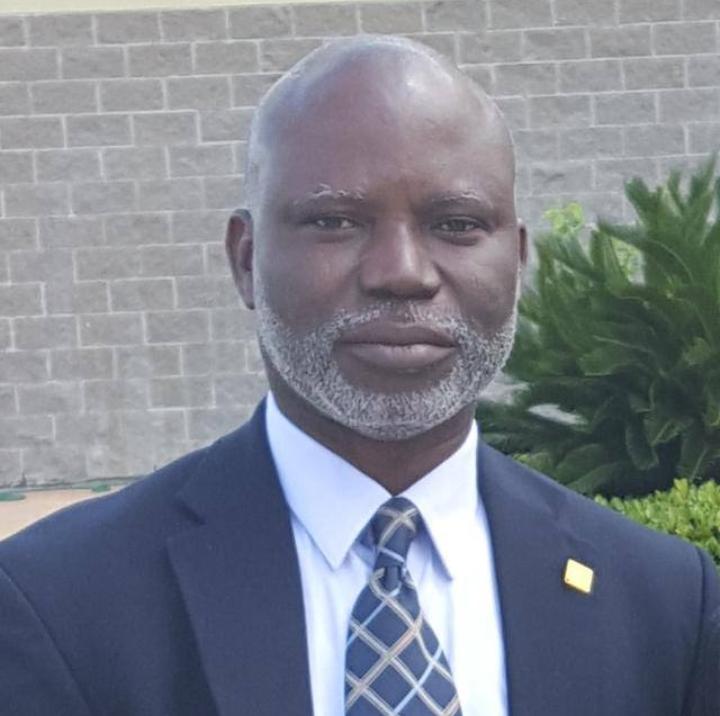
Top Safety expert and the Chief Executive Officer, Kevron Consulting, Engr. Kayode Fowode, has urged urgent action on Nigeria’s road safety challenges, citing weak enforcement, poor compliance, and inadequate infrastructure as major causes of preventable accidents.
In his statement on his official social platforms, he called for stronger measures, improved enforcement, and collective responsibility to prevent future tragedies and make roads safer for all users.
“We must ask difficult but necessary questions. Could this tragedy have been averted with stronger enforcement, functional speed cameras, and stricter penalties for offenders? What additional measures are needed to protect all road users, such as commuters, drivers, pedestrians, commercial transporters, and even high-profile visitors like Anthony Joshua?”
“The FRSC was established to improve road safety through regulation, enforcement, and public education, yet compliance remains a major challenge. Where do you think the gaps lie, and what practical solutions should be prioritised?”.
He added, “Let us use this moment, with humility and respect, to drive awareness and meaningful change. This is not about blame; it is about preventing the next avoidable tragedy.What needs to change to make our roads safer for everyone?”
What This Incident Demands Going Forward
The Ogun crash should not fade into memory as just another viral moment. It demands action:
• Stricter speed enforcement using technology, not just checkpoints
• Zero tolerance for unsafe parking of heavy vehicles
• Clearer road markings and warning systems
• Better-funded emergency response units on major highways
• Sustained public education, especially for young drivers and commercial transport operators.
Road safety is not a slogan- it is a daily practice backed by policy, discipline, and infrastructure.
A Final Reflection
The Anthony Joshua incident is not ultimately about a boxer. It is about a country where roads are lifelines and too often, graveyards. If this moment leads to safer behavior, stronger enforcement, and renewed urgency around highway safety, then perhaps the lives lost will not be remembered only for tragedy, but also for change. Because on Nigerian roads, getting home safely should never be a matter of chance.